PMI methods
MISTRAS performs PMI using two principal techniques, selected based on the material type, the elements of interest, and the application requirements.
X-Ray Fluorescence (XRF)
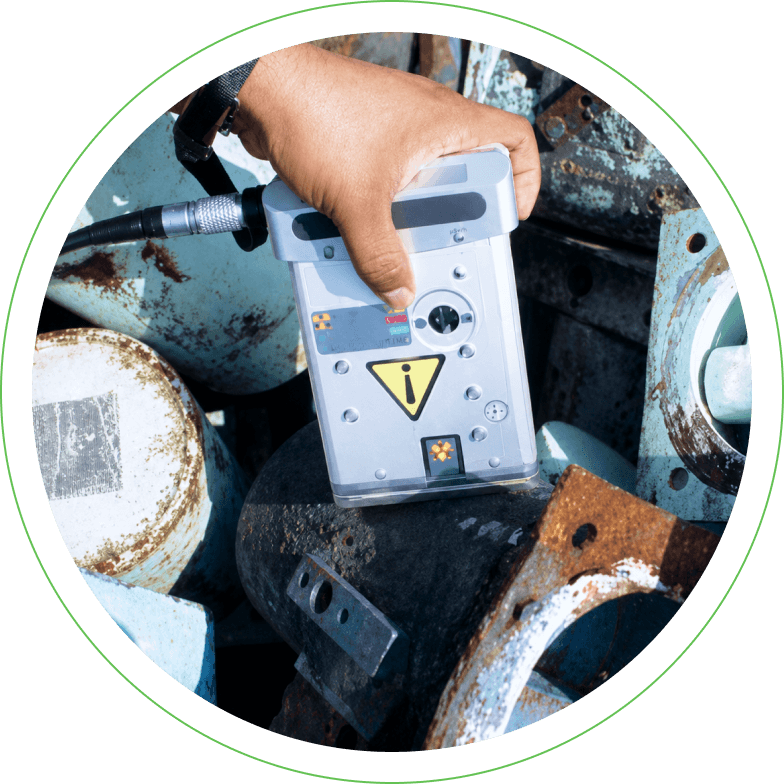
XRF is the most widely-used PMI method in the field. A handheld XRF instrument directs X-ray energy at the material surface, exciting the atoms within. Each element releases a characteristic secondary X-ray as electrons return to their resting state. By measuring the energy and intensity of these emissions, the instrument identifies and quantifies the material’s elemental composition.
XRF is fast, non-destructive, and requires minimal surface preparation. This makes it well-suited to in-service inspections, incoming material verification, and large-scale alloy sorting programs.
XRF is effective for identifying most alloy grades, including stainless steels, chrome-moly steels, nickel alloys, and copper-nickel alloys. It has limitations with elements of low atomic number. Carbon cannot be detected by XRF, meaning that differentiating between low-carbon and standard grades, such as 316 vs 316L stainless steel, requires a supplementary method.
Optical Emission Spectroscopy (OES)
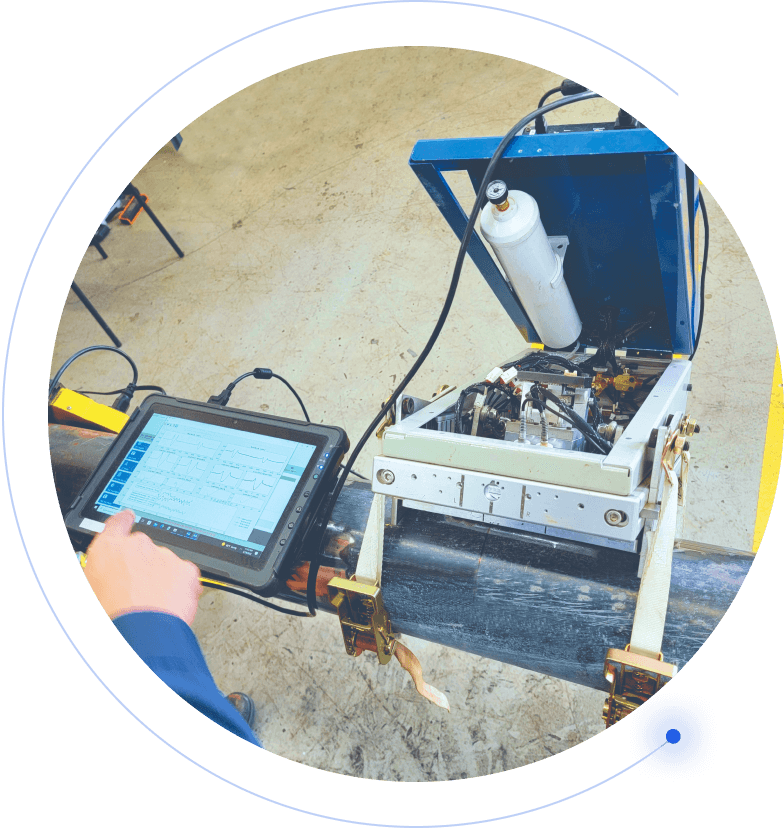
OES uses a spark or arc discharge to vaporize a small amount of material from the surface, exciting the atoms and producing a characteristic light spectrum. The wavelengths identify the elements present, while their intensity determines concentration levels. OES provides high precision across virtually all alloy elements, including carbon. This makes it the preferred method when carbon content verification is required, or when closely specified alloys must be distinguished with high confidence.
MISTRAS uses both portable OES and laboratory-based systems depending on the application. Our technicians are trained to select the appropriate method based on the specific verification requirements.