MISTRAS HIC/SOHIC inspection services
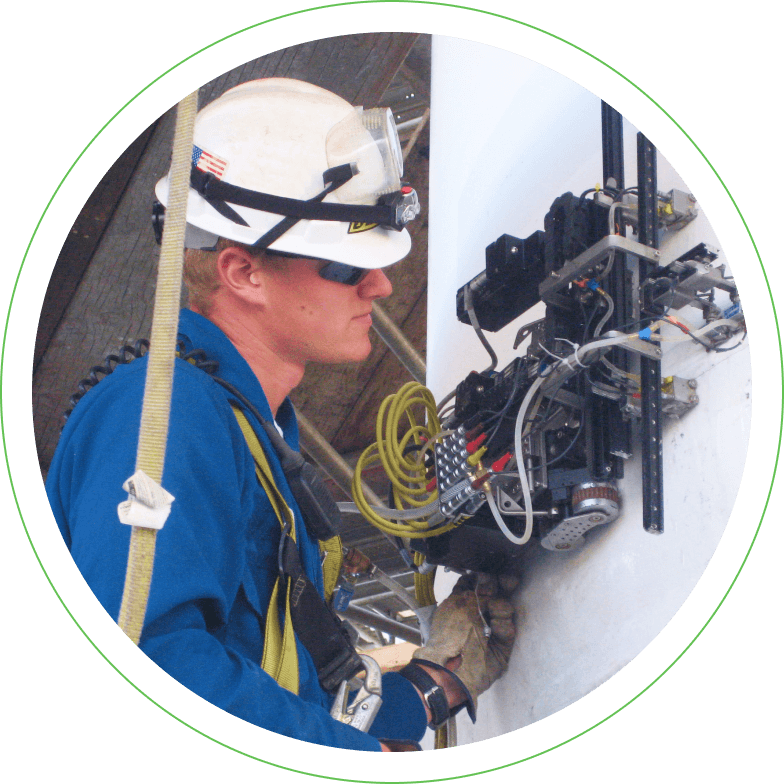
MISTRAS performs automated ultrasonic scanning for HIC and SOHIC using a multi-channel technique that combines two to five ultrasonic probes in both longitudinal and shear-wave detection modes. Probes operate simultaneously and are synchronized to allow accurate overlay of scanned images.
This multi-channel approach records HIC blisters and stepwise cracking in a single scan pass. The zero-degree probe detects blisters at varying depths, and the shear-wave probes confirm stepwise cracking connecting to the ID surface.
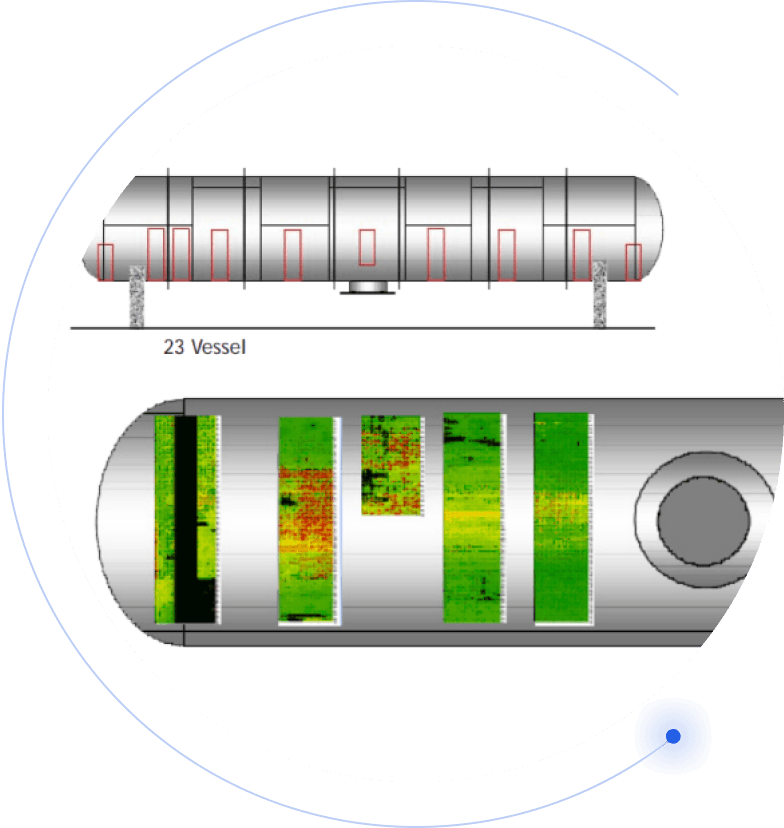
The scanning system acquires high-resolution C-scan data across the full inspection area, producing a color-coded map of HIC blister distribution, blister depth, stepwise cracking extent, and SOHIC-associated cracking in weld heat-affected zones. Bi-directional B-scan slicing of the C-scan image allows inspectors to examine data line by line, confirm blister connectivity, and accurately measure defect height, length, and position. Where SOHIC is present, the combined longitudinal and shear-wave data enable the inspection team to confirm the relationship between blisters and stress-driven crack propagation into the weld HAZ.
MISTRAS' analysis software gives inspectors powerful image enhancement tools needed to identify and confirm connections between blisters and the ID surface, and between HIC damage and SOHIC cracking arrays. Every critical defect dimension, height, length, depth, and position, is accurately measured and recorded, providing the data required for Fitness-for-Service evaluation under API 579 / ASME FFS-1.
Inspection reports are detailed, customized, and formatted for engineering review and regulatory submission. Results are permanently recorded for archiving and condition monitoring. Repeat inspections of the same areas at successive intervals allow defect growth rates to be tracked over time, supporting remaining life assessment and risk-based inspection planning. Reports are routinely used as the basis for FFS evaluations and repair prioritization decisions.


