Risk-Based Inspection (RBI) and corrosion management engineering services
Risk-Based Inspection (RBI) prioritizes inspections and maintenance based on the likelihood and consequences of equipment failure. It helps optimize resource allocation, enhance safety, reduce costs, and extend asset life through data-driven decision-making.
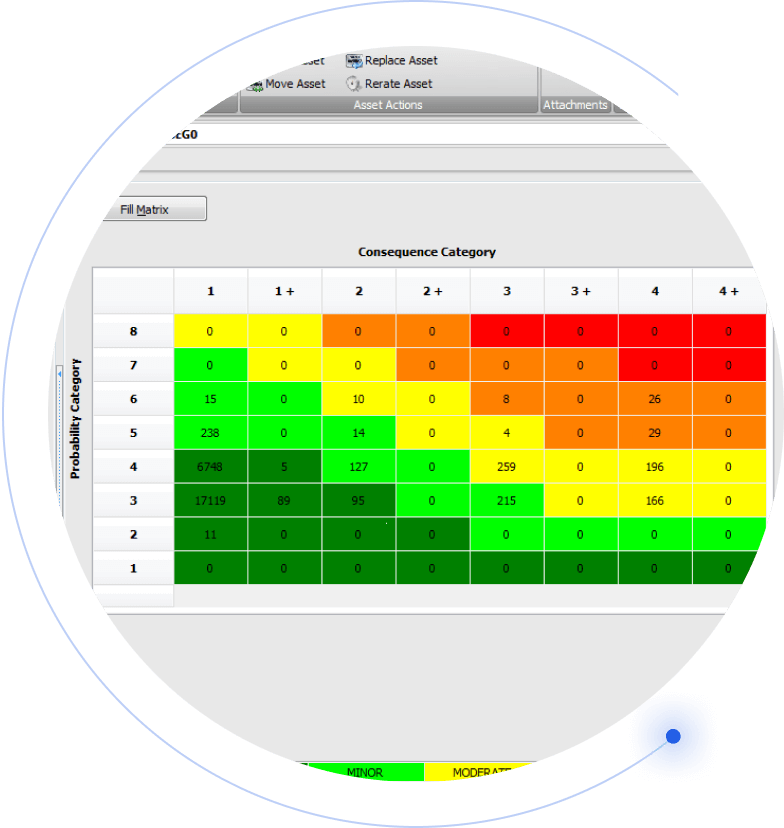
Risk-Based Inspection (RBI) is a strategic approach to managing the maintenance and inspection of assets, designed to prioritize resources based on the likelihood and consequence of failure. This methodology focuses on identifying assets with the highest criticality and determining the most effective inspection schedules to mitigate risks. RBI is built around evaluating both the probability of failure and the potential impact on safety, the environment, production, and costs.
MISTRAS’ expertise in asset integrity management helps ensure that companies can accurately assess risk levels and schedule inspections in a way that reduces unnecessary costs while maintaining safety and operational reliability.
The primary goal of RBI is to optimize the inspection process by aligning resources with the areas of greatest risk, ensuring that high-priority assets receive the attention they need while reducing unnecessary inspections of lower-risk components. It incorporates various factors such as historical data, equipment type, operational conditions, and environmental influences. By combining engineering judgment with data-driven insights, MISTRAS' RBI solutions help to ensure that assets are maintained safely and efficiently while minimizing downtime.
Key benefits of RBI include:
- Achieving better mechanical integrity Mechanical Integrity (MI) and equipment reliability
- Minimizing downtime by preventing unplanned outages
- Reducing safety risks
- Optimizing inspection and maintenance costs
- Focusing resources where they’re most needed
- Improving budgeting and planning for future inspections and maintenance
- Streamlining turnaround planning