HTHA inspection services
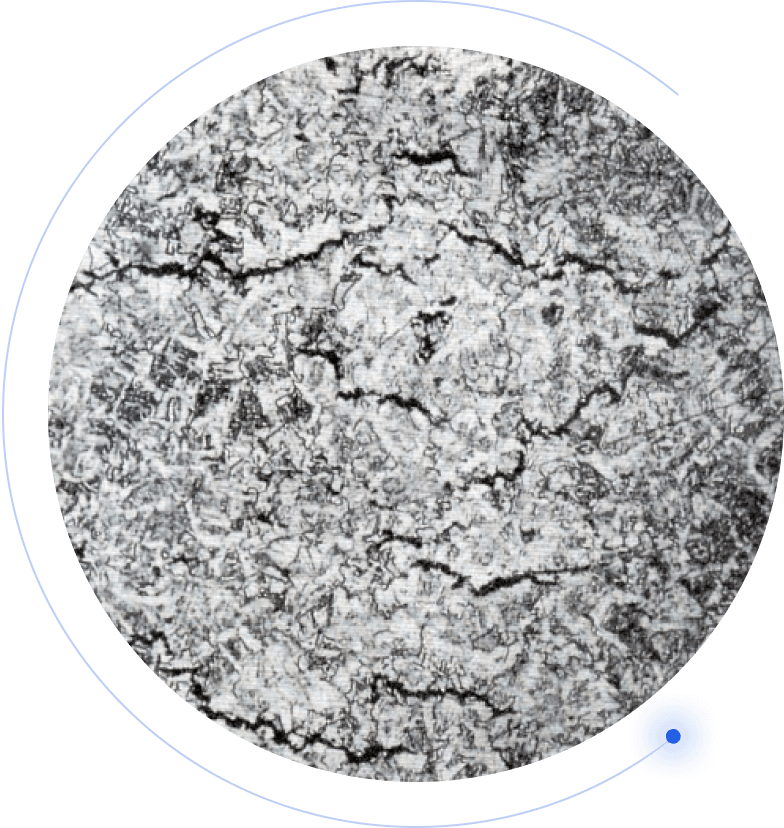
HTHA inspections are essential to ensure that your plant remains free of hazardous and costly damage. MISTRAS’ effective HTHA inspection plans result in:
- Significant reduction of risk
- Cost-efficient inspection procedures
- Accurate, timely results allowing for immediate action and repair
- Early detection of HTHA cracking
MISTRAS tailors our HTHA inspection plans to your asset’s material and location. With a robust suite of available NDT inspection technologies at our disposal, we can utilize one or multiple techniques until the desired results are achieved, including:
- Time of flight Diffraction (TOFD)
- Advanced Ultrasonic Backscatter Technique (AUBT)
- Velocity Ratio measurements
- Phased Array (PAUT)
Phased Array Ultrasonic Testing (PAUT)
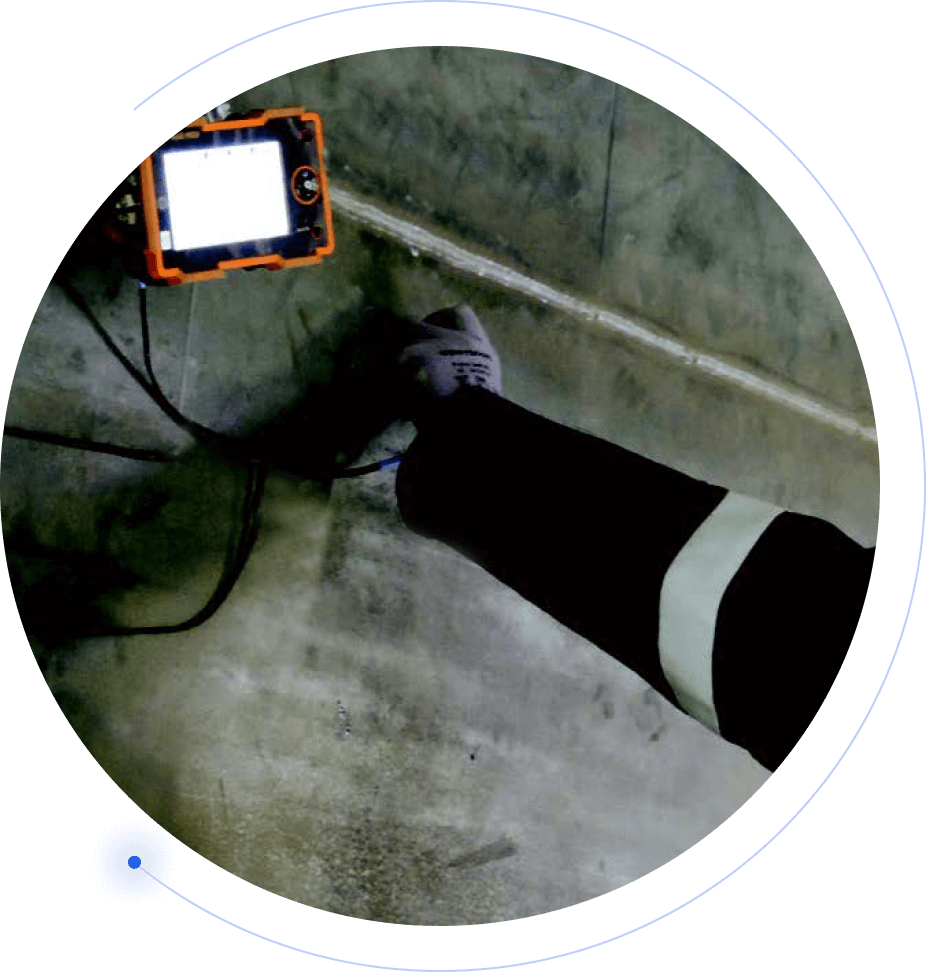
Phased Array is an ultrasonic testing technique that uses specialized multi-element “array” transducers and pulses those elements separately in a patterned sequence called “phasing”. This phasing sequence allows wave steering, focusing, and scanning. This is all performed electronically. The examination can be tailored for each application, increasing speed and reliability of the inspection.
Phased array ultrasonic testing (PAUT) is one of the primary methods used to characterize HTHA cracking in welds and heat affected zones. As a form of advanced ultrasonics (AUT), PAUT provides a rapid and nonintrusive inspection for even the most hard-to-reach assets, as the UT technology allows access to restricted areas.
Time-of-Flight-Diffraction (TOFD)
TOFD uses longitudinal waves passed between ultrasonic sensors to detect, locate, and size flaws based on the time of flight of any diffracted beams. MISTRAS utilizes TOFD to rapidly scan heat-affected zones and in-service components to analyze material composition and determine asset integrity.
Time-of-Flight-Diffraction (TOFD) is essential for analyzing through-wall depth cracking. It is sensitive to all types of weld flaws, providing a detailed image of damage in affected components.
Advanced Ultrasonic Backscatter Technique (AUBT) for HTHA
Advanced Ultrasonic Backscatter Technique (AUBT) is a collection of techniques used to evaluate frequency dependence, velocity ratio, and several other factors within an asset's material to determine which pieces have been affected by High Temperature Hydrogen Attack (HTHA). AUBT is part of MISTRAS' HTHA proceduralized Special Emphasis Program for HTHA detection.
AUBT is an advanced screening tool used to identify micro-cracking in parent material. It is extremely efficient in identifying even the smallest of faults caused by HTHA.
Using a straight beam transducer to scan the material in question, AUBT can quickly cover large surfaces, so asset size does not become a limiting factor in the inspection process. By comparing wall thickness across the entire area, AUBT can determine the presence of HTHA even in its earliest stages, helping owners better plan and prepare for future maintenance.
Velocity Ratio Measurements
By analyzing the difference in ratio between sound velocities in materials both affected and unaffected by HTHA, technicians can determine the presence and extent of HTHA damage. This is an accurate method even when 100% of wall thickness is damaged. Using an advanced calculation program, MISTRAS can reliably measure the presence and extent of HTHA.