GWT Technology
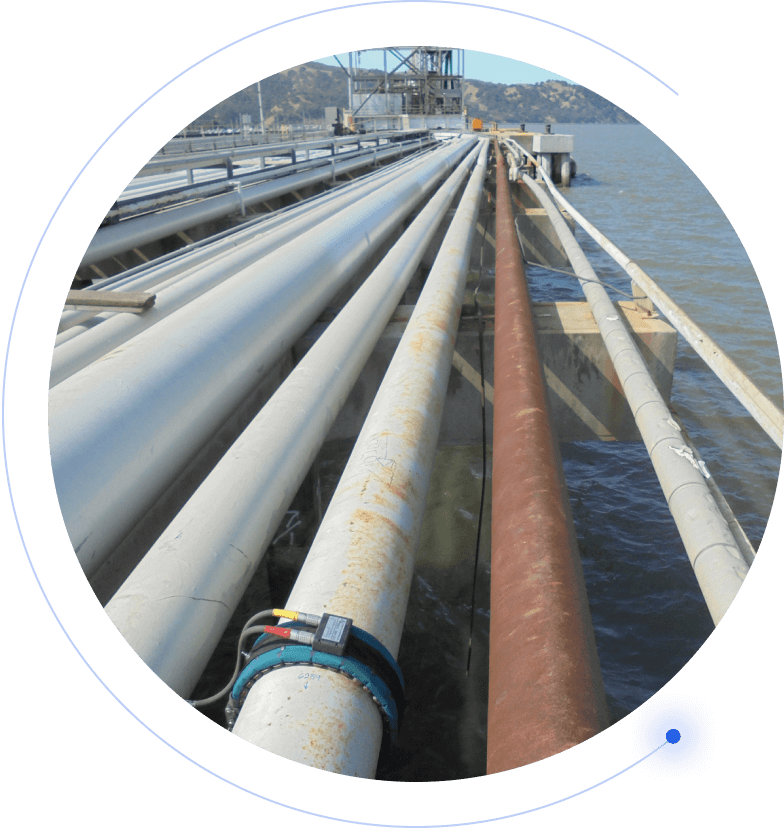
Guided Wave UT is used to rapidly inspect pipelines, piping systems, and other assets with minimal insulation removal. GUL quickly localizes cracking and corrosion damage to pinpoint and characterize length and depth. It is often used for unpiggable pipelines and for pipes resting on supports, making them susceptible to point-of-contact corrosion, or touchpoint corrosion (TPC).
GWT inspections are customizable to specific asset needs. Transducers are designed and placed so that the appropriate wave modes are transmitted into the structure. It is critical to ensure the correct ultrasonic wave mode is being used for the specific scan application.
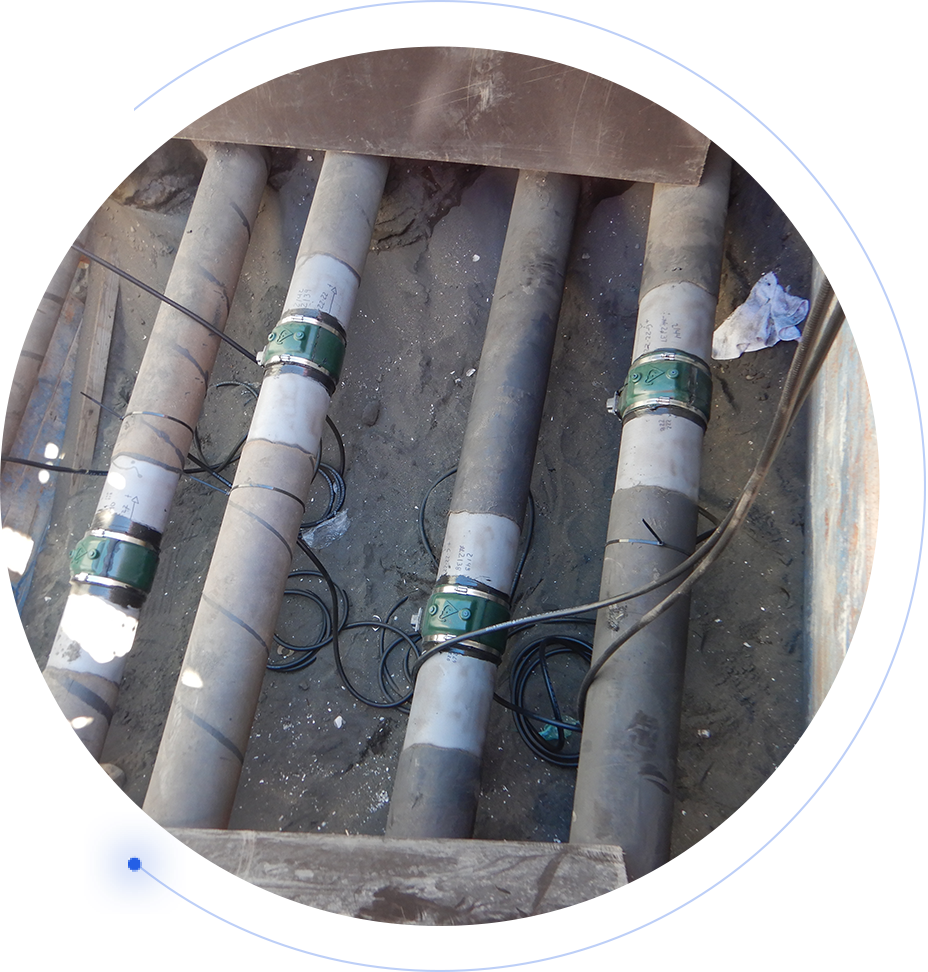
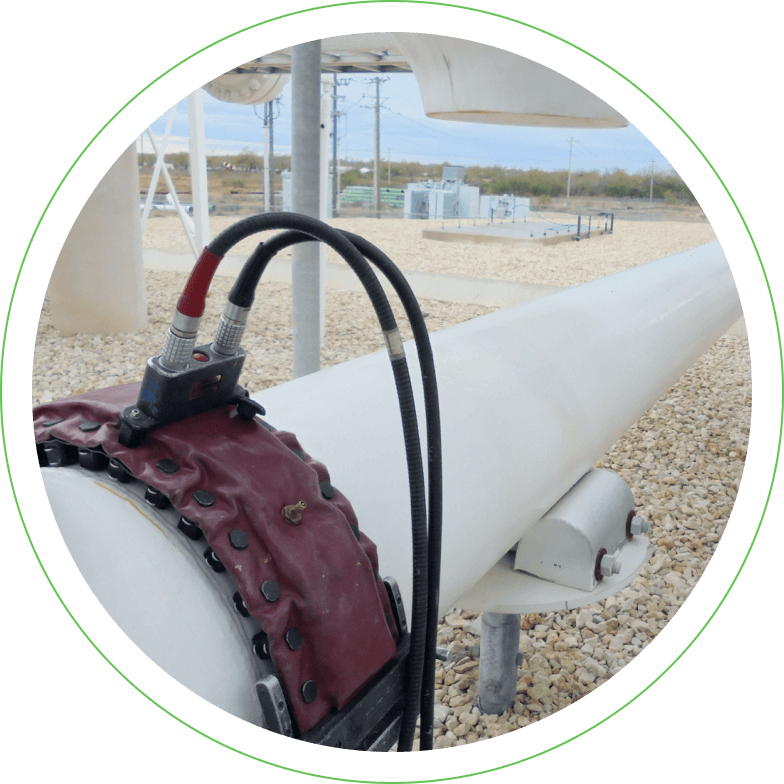
The technology utilizes torsional and longitudinal waves to inspect large sections of piping from one location. Inspections begin with a collar around a pipe section. Individual scans, referred to as “shots”, are conducted, reflecting girth welds, corrosion, and cracks from fixed reference points.
MISTRAS uses software to analyze these reflections to produce information on the probability, approximate size, and location of the flaws. Reports can be comprehensive or concise, depending on client preferability. Supporting documents such as Quantitative Short Range (QSR) B-Scan images, photographs, Time of Flight Diffraction (TOFD) screen-captures, and Large Structure Inspection (LSI) scans can be imported into the report.
Our LSI scanning services include:
- Corrosion/Erosion Detection
- Wall Thickness Mapping